Elevate Your Space: Infusing Spiritual Serenity with Mandala Designs
In today's fast-paced world, creating a sanctuary within your home has become more important than ever. The spaces we inhabit directly influence our mental health, emotional well-being, and spiritual growth. One of the most effective ways to transform your environment into a haven of tranquility is through the incorporation of mandala designs. These ancient, sacred geometric patterns have captivated cultures across the globe for thousands of years, and their presence in modern interior design continues to inspire and uplift those who encounter them. At OakleeMoss, we believe that your space should be a reflection of your inner peace and spiritual aspirations. This comprehensive guide will explore how mandala designs can elevate your surroundings and create an atmosphere of spiritual serenity that resonates with your soul.
Understanding Mandala: The Sacred Geometry of Spirituality
Before we delve into the practical applications of mandala designs in your home, it's essential to understand what mandalas truly represent and why they hold such profound significance across multiple spiritual traditions.
The Origins and Meaning of Mandalas
The word mandala comes from Sanskrit, meaning circle or completion. These intricate geometric patterns have been used for centuries in Hindu, Buddhist, and other spiritual traditions as tools for meditation, prayer, and spiritual awakening. A mandala is far more than just a beautiful pattern; it represents the universe, wholeness, and the interconnectedness of all things. The circular structure symbolizes the cycle of life, the eternal nature of existence, and the journey toward enlightenment.
In Buddhist traditions, mandalas serve as visual representations of the cosmos and are often used as meditation aids to help practitioners focus their minds and deepen their spiritual practice. In Hindu philosophy, mandalas represent the divine and are used in rituals and ceremonies to invoke spiritual energy and protection. The intricate patterns within each mandala are carefully constructed to create a sense of balance and harmony, drawing the eye toward the center and encouraging a meditative state of mind.
The Psychological Impact of Mandala Designs
Beyond their spiritual significance, mandalas have a profound psychological impact on those who view them. The symmetrical nature of mandala patterns naturally calms the mind and reduces stress. When we look at a mandala, our eyes are drawn inward toward the center, which encourages introspection and self-reflection. This natural movement of attention helps to quiet the constant chatter of the mind and promotes a state of relaxation and mental clarity.
Research in color psychology and visual perception has shown that symmetrical patterns, particularly those found in mandalas, can lower cortisol levels, reduce anxiety, and promote feelings of peace and well-being. The repetitive, balanced nature of mandala designs creates a sense of order and predictability, which our brains find comforting. This is why mandalas have become increasingly popular in therapeutic settings, wellness centers, and homes of individuals seeking to create more peaceful environments.
The Role of Color in Mandala Design
Color plays a crucial role in the effectiveness of mandala designs in creating spiritual serenity. Different colors carry different vibrations and energies, and understanding these associations can help you choose mandalas that align with your specific intentions and needs.
Color Symbolism and Energy
In mandala design, colors are not chosen arbitrarily; they carry deep symbolic meaning and energetic significance. Blue, for instance, is associated with tranquility, communication, and spiritual awareness. It's an excellent choice for meditation spaces and bedrooms where you want to promote calm and restful energy. Green represents healing, growth, and renewal, making it perfect for spaces dedicated to personal development or recovery. Purple and indigo are associated with intuition, spiritual insight, and higher consciousness, making them ideal for meditation rooms or spaces where you engage in creative or spiritual work.
Red and orange carry warming, energizing qualities and are associated with passion, vitality, and grounding energy. These colors work well in living spaces where you want to encourage social interaction and positive energy flow. Yellow represents joy, clarity, and mental stimulation, making it suitable for home offices or creative spaces. White and silver symbolize purity, clarity, and spiritual connection, while gold represents abundance, prosperity, and divine energy.
Creating Color Harmony in Your Space
When selecting mandala designs for your home, consider the existing color palette of your space and how the mandala's colors will interact with it. A monochromatic mandala in shades of blue and white can create a serene, minimalist aesthetic, while a vibrant, multi-colored mandala can serve as a focal point and energetic anchor in a room. The key is to choose colors that resonate with your intentions for that particular space and that complement your existing décor.
At OakleeMoss, we offer a diverse range of mandala designs in various color combinations, allowing you to find the perfect match for your space and spiritual needs. Whether you prefer subtle, muted tones or bold, vibrant hues, there's a mandala design that will elevate your environment and support your spiritual journey.
Incorporating Mandalas into Different Rooms of Your Home
Each room in your home serves a different purpose and requires a different energetic atmosphere. By strategically placing mandala designs throughout your living space, you can create a cohesive environment that supports your well-being in every area of your life.
The Bedroom: A Sanctuary for Rest and Renewal
Your bedroom should be a sacred space dedicated to rest, rejuvenation, and intimate connection. Mandala designs in soft, calming colors like lavender, pale blue, or soft pink can create an atmosphere conducive to deep sleep and peaceful dreams. Consider placing a mandala tapestry above your bed as a focal point, or opt for mandala-printed bedding that combines comfort with spiritual aesthetics.
The bedroom is an ideal location for mandalas because the quiet, introspective nature of these designs aligns perfectly with the purpose of the room. As you drift off to sleep, the mandala's geometric patterns can help quiet your mind and transition you into a restful state. Many people find that sleeping in a room adorned with mandala designs leads to more peaceful sleep and more vivid, meaningful dreams.
The Living Room: Inviting Positive Energy and Connection
The living room is where family and guests gather, making it an important space for creating welcoming, positive energy. A large mandala wall hanging or artwork can serve as a stunning focal point that sparks conversation and creates a sense of harmony in the space. Choose mandalas with warm, inviting colors that encourage social connection and positive interaction.
In the living room, mandalas can help create a balanced energy that supports both relaxation and social engagement. The circular, inclusive nature of mandala designs naturally promotes a sense of unity and connection, making them perfect for spaces where people come together. Whether you choose a traditional mandala design or a more contemporary interpretation, the presence of this sacred geometry will elevate the spiritual atmosphere of your living space.
The Home Office: Enhancing Focus and Creative Flow
For those who work from home, creating an environment that supports focus, clarity, and creative flow is essential. Mandala designs in shades of yellow, gold, or orange can stimulate mental clarity and creative thinking. A mandala artwork placed where you can see it during breaks can help reset your mind and prevent mental fatigue.
The home office benefits greatly from mandala designs because these patterns help organize mental energy and promote concentration. When you're feeling overwhelmed or stuck creatively, taking a moment to gaze at a mandala can help center your thoughts and reconnect you with your sense of purpose. Many creative professionals and entrepreneurs have found that incorporating mandala designs into their workspace significantly enhances their productivity and the quality of their work.
The Meditation or Prayer Room: Creating a Sacred Sanctuary
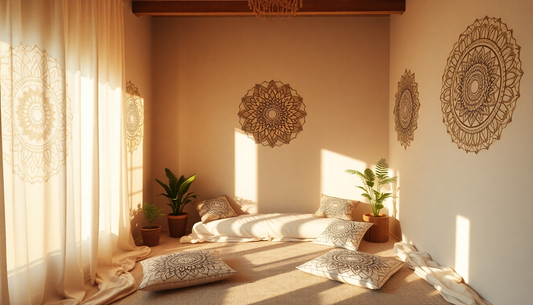
If you have a dedicated meditation or prayer space, mandala designs are absolutely essential. This is the perfect location for larger, more intricate mandala artworks that command attention and invite deep contemplation. Choose mandalas that resonate with your spiritual practice and place them at eye level where you can focus on them during meditation.
A meditation room adorned with mandala designs becomes a powerful tool for spiritual practice. The geometric precision and symbolic depth of mandalas create an environment that naturally supports deeper states of consciousness and spiritual insight. Many practitioners find that meditating in a space decorated with mandalas accelerates their spiritual development and enhances the quality of their practice.
The Bathroom: Infusing Daily Rituals with Spiritual Awareness
Even the bathroom can be transformed into a spiritual space through the incorporation of mandala designs. Mandala shower curtains, bath mats, or wall art can turn your daily hygiene rituals into moments of mindfulness and spiritual awareness. Choose waterproof mandala designs that can withstand the moisture of the bathroom environment.
The bathroom is an often-overlooked space for spiritual enhancement, yet it's a place where we spend time alone with our thoughts. By incorporating mandala designs into this space, you transform routine activities into opportunities for self-reflection and spiritual connection. Starting your day by gazing at a beautiful mandala while you shower or prepare yourself can set a positive, centered tone for the entire day.
Mandala Design Styles and Variations
The world of mandala design is incredibly diverse, with countless styles and variations to suit different aesthetic preferences and spiritual traditions. Understanding these different styles can help you choose designs that resonate most deeply with you.
Traditional Mandala Designs
Traditional mandalas, rooted in Hindu and Buddhist spiritual practices, feature intricate geometric patterns with multiple layers of detail. These designs often incorporate sacred symbols, Sanskrit characters, and symbolic representations of deities or spiritual concepts. Traditional mandalas are highly detailed and symmetrical, with each element carefully placed to create a harmonious whole.
If you're drawn to the deep spiritual roots of mandala practice, traditional designs offer an authentic connection to these ancient traditions. These mandalas are perfect for meditation spaces and for those seeking to deepen their spiritual practice through engagement with traditional spiritual symbolism.
Contemporary and Modern Mandala Designs
Modern interpretations of mandalas blend traditional geometric principles with contemporary aesthetics. These designs might incorporate abstract elements, watercolor effects, or mixed media approaches while maintaining the essential circular, symmetrical structure that defines a mandala. Contemporary mandalas often feel more accessible to those new to mandala practice while still honoring the spiritual essence of the form.
Contemporary mandala designs are excellent for those who want to incorporate spiritual elements into their home without necessarily adhering to traditional religious or spiritual frameworks. These designs work well in modern, minimalist, or eclectic décor styles and appeal to a broad range of aesthetic preferences.
Floral and Nature-Inspired Mandalas
Many mandala designs incorporate floral elements, creating beautiful combinations of geometric precision and organic natural forms. Flowers have their own spiritual significance and symbolism, and when combined with mandala geometry, they create designs that feel both grounded and transcendent. Floral mandalas often appeal to those with a strong connection to nature and the natural world.
These designs bring the healing energy of nature into your home while maintaining the meditative, centering qualities of traditional mandalas. Floral mandalas work particularly well in bedrooms, living rooms, and spaces dedicated to wellness and healing.
Chakra Mandalas
Chakra mandalas represent the seven energy centers in the human body according to Hindu and yogic traditions. Each chakra is associated with specific colors, elements, and spiritual qualities. Chakra mandalas are powerful tools for energy work and spiritual healing, helping to balance and align your energetic body.
If you're interested in energy healing and chakra work, chakra mandalas are an excellent addition to your home. These designs serve as visual reminders of your energetic anatomy and can support your healing and spiritual development work.
Zodiac and Astrological Mandalas
For those interested in astrology, zodiac mandalas combine mandala geometry with astrological symbols and meanings. These designs can help you connect with your astrological identity and the cosmic forces that influence your life. Zodiac mandalas make meaningful, personalized décor choices that reflect your unique astrological profile.
Choosing the Right Mandala Design for Your Space
With so many beautiful mandala designs available, selecting the right ones for your home can feel overwhelming. Here are some key considerations to guide your choices.
Assessing Your Spiritual Intentions
Before selecting mandala designs, take time to reflect on your spiritual intentions and what you hope to cultivate in your home. Are you seeking greater peace and relaxation? Do you want to enhance your meditation practice? Are you looking to heal from emotional wounds? Do you want to invite more abundance and prosperity into your life? Your intentions should guide your choices in terms of color, style, and placement.
At OakleeMoss, we encourage customers to think deeply about their spiritual goals and to choose designs that align with these intentions. A mandala that resonates with your deepest aspirations will have a much more powerful impact on your space and your well-being than one chosen purely for aesthetic reasons.
Considering Your Aesthetic Preferences
While spiritual significance is important, you also want your mandala designs to complement your personal aesthetic and existing décor. Consider the overall style of your home, whether it's modern, bohemian, traditional, minimalist, or eclectic. Choose mandala designs that feel authentic to your personal style while still supporting your spiritual intentions.
Your home should feel like a true reflection of who you are, and this includes both your spiritual values and your aesthetic preferences. The most powerful mandala designs are those that speak to both your soul and your sense of beauty.
Evaluating Size and Placement
The size and placement of your mandala designs significantly impact their effectiveness in transforming your space. A large mandala artwork can serve as a powerful focal point and energetic anchor in a room, while smaller designs can be grouped together to create visual interest and spiritual resonance. Consider the size of your walls, the existing furniture and décor, and the natural focal points of each room when deciding on size and placement.
Placement is equally important. Mandalas placed at eye level where you naturally gaze are more effective than those placed too high or too low. In meditation spaces, place mandalas directly in your line of sight during practice. In living areas, position mandalas where they can be appreciated during daily activities.
Quality and Materials
The quality of your mandala designs matters significantly. High-quality materials, vibrant colors, and precise printing or craftsmanship ensure that your mandalas remain beautiful and energetically potent for years to come. At OakleeMoss, we are committed to offering only the highest quality mandala designs, crafted with attention to detail and made from durable, sustainable materials.
Whether you choose mandala tapestries, wall art, home décor items, or wearable designs, investing in quality ensures that your mandalas will continue to elevate your space and support your spiritual practice for years to come.
Mandala Designs as Meditation Tools
Beyond their role as decorative elements, mandalas serve as powerful meditation tools that can deepen your spiritual practice and accelerate your spiritual growth.
Using Mandalas for Focused Meditation
One of the most traditional uses of mandalas is as a focus point for meditation. By gazing at a mandala during meditation, you give your mind a specific point of focus, which helps prevent wandering thoughts and deepens your meditative state. The journey from the outer edges of the mandala toward the center mirrors the spiritual journey inward toward your true self.
To use a mandala for meditation, sit comfortably in front of the design and allow your gaze to rest on it. You might start by looking at the outer edges and slowly move your attention inward toward the center. As your mind becomes absorbed in the patterns and colors, you may experience a sense of timelessness and unity. This practice can be done for as little as five minutes or for extended periods, depending on your preference and available time.
Mandala Gazing and Visualization
Another powerful practice is mandala gazing combined with visualization. As you gaze at a mandala, you might visualize its colors and patterns flowing through your body, healing and balancing your energy. You might imagine yourself moving through the mandala's layers, each one representing a deeper level of consciousness or spiritual understanding.
This practice combines the visual focus of mandala gazing with the creative power of visualization, creating a multi-layered meditation experience that can be deeply transformative. Many practitioners find that regular mandala gazing and visualization practices lead to significant shifts in consciousness and spiritual awareness.
Mandalas and Chakra Balancing
If you're working with chakra energy, mandalas can be powerful tools for balancing and aligning your chakras. By meditating on chakra mandalas or mandalas in colors associated with specific chakras, you can direct healing energy to areas that need attention. This practice is particularly effective when combined with breathwork and body awareness.
The Science Behind Mandala's Calming Effects
While mandalas have deep spiritual roots, modern science has also validated their calming and therapeutic effects. Understanding the science behind these effects can deepen your appreciation for mandala designs and their role in creating spiritual serenity.
Neurological Responses to Symmetry
Research in neuroscience has shown that the human brain is naturally drawn to symmetrical patterns and finds them inherently calming. The bilateral symmetry of mandala designs activates the brain's pattern recognition systems in a way that feels satisfying and peaceful. When we view symmetrical patterns, our brains require less processing effort, which allows us to relax and enter a more meditative state.
This neurological response to symmetry is one reason why mandalas are so effective at reducing stress and promoting relaxation. The symmetrical nature of these designs literally makes it easier for our brains to relax and find peace.
The Role of Fractals in Mandala Design
Many mandala designs incorporate fractal patterns, which are self-similar patterns that repeat at different scales. Fractals are found throughout nature